a sonoma garden

adventures in organic living

  • About
    • Buy Our Booklet
  • Gardening
    • Gardening Tips
    • State of the Garden
    • Sprouting
    • Just Picked
    • Flowers
  • In the Kitchen
    • Recipes
    • Thoughtful Eating
    • Preserving
  • Life in Sonoma
    • Our Weekends
    • Musings
    • Holidays
    • Reading
  • Body Care
    • Simple Handcrafted Body Care eBooklet
    • Body Care Recipe Index
  • Making
    • knitting
    • Natural Dying
    • Building
  • Tending to Animals
    • chickens
    • beekeeping

Natural Dying

April 17, 2012 by asonomagarden 14 Comments

IMG_2335

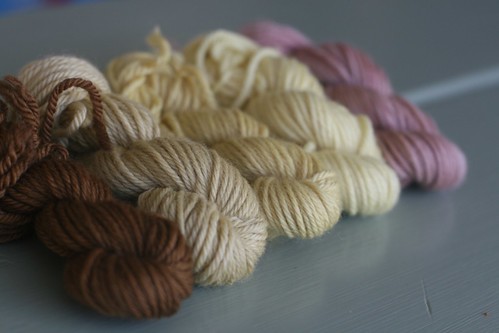
(left to right: dyed with walnut hulls, fennel with copper, daffodils, fennel with alum, avocado skins)

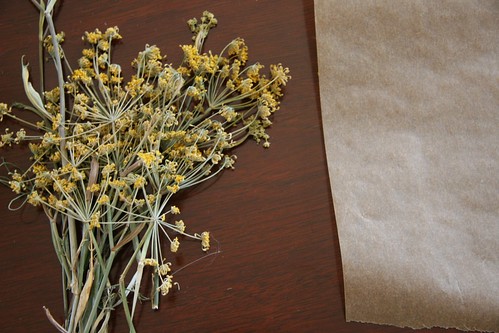
Ever since I tried my hand at dying yarn with our walnut hulls last autumn, I’ve had the bug to try other natural dying. I bought a couple of inspiring books (Harvesting Color & The Handbook of Natural Plant Dyes) that I’d frequently browse through, but I could never quite find the time to experiment. After giving a fellow knitting friend those two books to borrow and casually suggesting that the wild fennel was starting to sprout up the street, she emailed me saying, ‘let’s try it!’ I made a quick trip down to Dharma Trading Company for undyed yarn and invited her over after we dropped the kids off at school. It was a fun morning, stewing up wild fennel and dried daffodils in large pots while drinking tea and chatting about all sorts of things.
IMG_2332

(left to right: dyed with avocado skins, fennel with alum, daffodils, fennel with copper, walnut hulls)

Natural dying is great fun, as long as you go into it without any expectations. In one of my books, one of the authors got a pale green from her fennel dying, so we were both ready to see green appear on our yarn and cotton tablecloth, we got pale yellow instead and barely any color on the cotton when we used alum as a mordant. We divided the fennel dye water into two parts, one for adding alum as a mordant (we combined mordant with dye to save time) and in the next we put a copper pot into the dye pot to weigh down the yarn. If you dye in an unlined copper pot you don’t need a mordant. Since our copper pots are lined, I did the reverse and put the pot inside the dye bath. We got a much different color, as seen above.

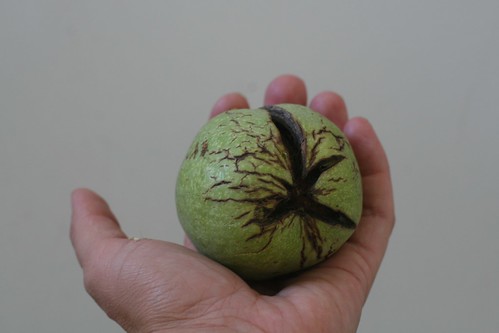
After she left I bravely strained out the second batch of walnut hulls I had been soaking since…oh last November. It was fragrant, let me tell you that, but what a much richer dye color it made this time, in comparison with the last batch! The pink/mauve came from avocado skins! Can you believe that? Who would have though avocado skins would turn wool pink!

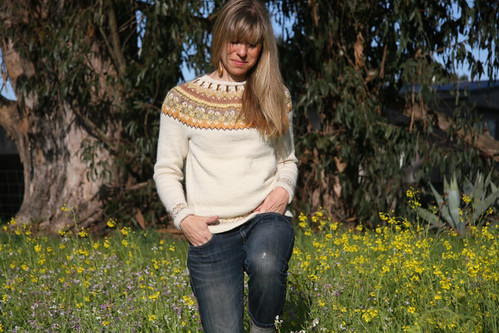
I have a romantic notion of making an entire fair isle sweater made from yarn dyed from plants grown on my street (update: I DID make the sweater!). I don’t know if that can really happen, but a girl can dream. It certainly has been a fun experiment. You can really delve deep into the chemistry of dying and change colors by adding washing soda or vinegar or all sorts of different things to change the pH. But for now I’m sticking with the basics. I’m now impatiently waiting for the purple iris’ to bloom and then dye to see what they will do!

These blogs really inspired me about natural dying:  Rhubarb in the Garden, Naturally Dyeing, & Tinctory

Share this:

  • Email a link to a friend (Opens in new window) Email
  • Print (Opens in new window) Print
  • Tweet
  • Share on Tumblr

Like this:

Like Loading…

Related Posts:

  • IMG_4863
    My Naturally and Locally Dyed Fair Isle Sweater
  • IMG_0686
    Collecting Wild Fennel Pollen
  • IMG_0905
    Natural Dying with Walnuts
  • IMG_2967
    The Summer of Experimentation
  • Knitting & Reading
    Hollyhock Gloves & Barn Sweater : : Knitting & Reading
  • IMG_0019
    Knitting and Dyeing

Filed Under: In the Kitchen Tagged With: dying with avocado skins, dying with daffodils, dying with walnuts, dying with wild fennel, natural dyes, natural plant dyes

« Things around here
Cut, built, caught »

Comments

  1. Maybelline says

    April 17, 2012 at 9:32 pm

    Beautiful. Does the color wash out easily?

    Reply
  2. Joanne says

    April 18, 2012 at 1:35 am

    Yay! These look so lovely! Am in awe of the pink you extracted from avocado skins…mine was so pale.
    I was reading on tinctury’s archives that fennel gives different colours at different seasons of growth – so you might get the green a little later in the season!
    Good luck with the fairisle project!

    Reply
  3. jo's loft says

    April 18, 2012 at 2:16 am

    I love the results! You might want to look at this site too: http://riihivilla.blogspot.com , I just found it recently and also found it inspiring.
    I look forward to seeing what other results you get! Good Luck!

    Reply
  4. Lynda says

    April 18, 2012 at 4:35 am

    These are lovely especially the avocado skins. I think I need to get some material out and try it again. Thanks for the inspiration!!

    Reply
  5. stefaneener says

    April 18, 2012 at 8:18 am

    That’s a lovely brown. Patience really is rewarded. I have had mixed results. Great indigo, but boring eucalyptus. It’s sort of a crapshoot.

    Reply
  6. mandy says

    April 18, 2012 at 11:45 am

    i save my onion skins in the freezer for dying…now i’ll start saving the avocado skins as well, how very wonderful that pink is!

    Reply
  7. Peach says

    April 18, 2012 at 1:20 pm

    Avocado skins… AMAZING!

    Reply
  8. Happygirl says

    April 18, 2012 at 3:38 pm

    These are wonderful. I have the same question about the color washing out. You will have to let us know.

    Reply
  9. Randi says

    April 20, 2012 at 6:43 am

    Nice results! Plant dyeing is on my list of future experiments, too. I bought some indigo seeds from the Fibershed marketplace and am attempting to grow my own blue dye. Another one I’d like to try is eucalyptus bark; it apparently produces a deep burnt sienna (and there are tons of eucalyptus trees all over Sonoma).

    Reply
  10. Melissa says

    April 24, 2012 at 12:27 pm

    Dharma has a store front??? For some reason I thought they were only online. And here I am not more than 30 minutes away from them….

    Reply
    • asonomagarden says

      April 24, 2012 at 12:47 pm

      Yes, you must go! It’s on 4th street in San Rafael.

      Reply

Trackbacks

  1. A Clean Palette | A Sonoma Garden says:
    January 18, 2013 at 6:01 am

    […] to make it a native garden for the bees. Maybe it should be planted with flowers and plants for natural dying. What do you think? What would you plant if given a clean […]

    Reply
  2. My Naturally and Locally Dyed Fair Isle Sweater | A Sonoma Garden says:
    February 12, 2013 at 6:01 am

    […] finished! You may have remembered that last April I mused about how I dreamed of creating a fair isle sweater out of colors I dyed from plants I collected […]

    Reply
  3. Growing Things from Seed | A Sonoma Garden says:
    October 2, 2013 at 6:01 am

    […] in hopes of doubling my yield of flowers next spring. I grew the black hollyhocks specifically for dying yarn. The book Harvesting Color shows that they give a beautiful blue color, which is a rare color to […]

    Reply

Leave a ReplyCancel reply


STAY CONNECTED

  • Email
  • Facebook
  • Instagram
  • Pinterest
  • RSS
Ebates Coupons and Cash Back

Buy & Make Today

Topics

Archives

Mountain Rose Herbs. A Herbs, Health & Harmony Com

Copyright © 2026 · Foodie Pro Theme by Shay Bocks · Built on the Genesis Framework · Powered by WordPress

%d